.png)


The Treasure of the Transitus
Updated: Jul 24

There are places where history feels distant, but Assisi is not one of them. This year, pilgrims from across the world have been making their way to the little Umbrian hill town to mark the 800th anniversary of the Transitus of St Francis. It is not simply the anniversary of his death but, as one banner in Assisi beautifully described it, his passage into eternal life.
Some years ago, I wandered into an Oxfam bookshop and found an early edition of G. K. Chesterton's St Francis of Assisi. It’s a book that I tend to read parts of every year. Opening the cover is a handwritten inscription:
Best wishes, W. H. Whitley, Christmas 1925.

Someone had received this very book a century ago, around the time of the last great centenary of Francis' passing. They had turned these same pages and perhaps carried this same volume through these same streets. Now, one hundred years later, it had become my companion too.
We often hear that the word catholic means universal, and perhaps this leads us to think of the faith geographically, embracing every nation, every language and every culture. Yet perhaps its universality is even more remarkable through the concept of time. Every Mass unites earth with heaven, celebrating the same Last Supper as Christ and His Apostles. Every saint is our contemporary.
Holding a book that had accompanied a pilgrim of the previous centenary, I realised I was not simply remembering history, rather I was part of it. Carrying our five-month-old daughter through Assisi's medieval streets made that truth even more tangible. She knew nothing of anniversaries or Transituses (though, to be fair, neither had I before this year), yet she too had become part of this long procession of pilgrims stretching across generations. In those small moments, the centuries seemed to fold together.

Chesterton understood this better than most. Reflecting on Francis, he writes:
"The casket that was locked in Palestine can be unlocked in Umbria;
for the Church is the keeper of the keys."
He constantly points the story of St Francis back to its true centre: Christ Himself. The events of Galilee did not remain in Galilee. The Gospel reached the hills of Umbria and transformed a wealthy merchant's son into perhaps the most recognisable saint in Christian history. And through Francis, Assisi continues to transform pilgrims today.
That became clear for us before sunrise each morning. Long before the streets filled with visitors, we would make our way through Assisi's narrow stone lanes towards the Basilica of St Francis. Swifts darted between church rooftops and bell towers, their flight constantly drawing the eye towards heaven. Assisi is built upon a hill, but it also seems built to lift the heart. Much like Jerusalem, the holiest city, the city on the hill, to reach it physically and spiritually, we must ascend.

At 7:15 each morning, the Franciscan brothers celebrated Mass in the Lower Basilica. Above us stood one of the great churches of Italy with its mesmerising Giotto frescoes depicting Francis' life. Below us rested Francis himself. Yet he is not buried alone. Around him lie the first brothers who shared his extraordinary adventure of following Christ.
One name especially caught my attention: Brother Leo. The friar who became Francis' closest friend, confessor and secretary. The one who remained. The one entrusted with some of Francis' most intimate writings. Standing beside his tomb, I found myself thinking of our Leo.
Much has been written about Pope Leo XIV's choice of name, understandably linking it to Pope Leo XIII and the Church's social teaching during a period of enormous industrial revolutions and social change, much like our own. Yet standing beside Brother Leo, it was difficult not to wonder whether the name was chosen for another purpose.
Just as Brother Leo continued the path laid out by St Francis, perhaps Pope Leo is continuing the path laid out by Pope Francis. Whether intended or not, the thought seemed fitting in a that place.
La Verna
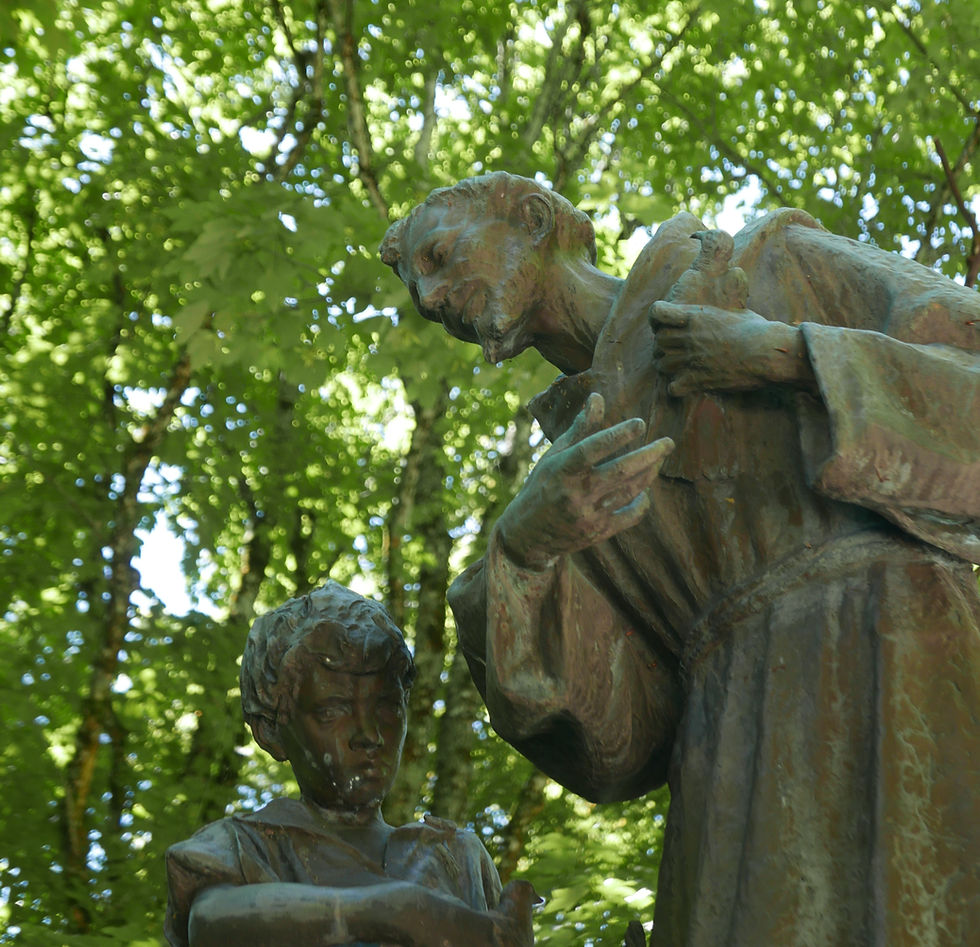
If Assisi is filled with joy, La Verna is filled with peace. The mountain seems suspended outside ordinary time. Here, in September 1224, Francis received the stigmata while praying alone.
In my travels across Italy, I have gotten used to describing the many beautiful churches and places of immense historical importance. Yet La Verna possesses something more difficult to describe. It has the rare peace that belongs to places where prayer has soaked through the rock itself. Even with pilgrims arriving throughout the day, silence somehow remains the loudest voice. Of all the places we visited on our pilgrimage, it was here that I found the deepest peace.
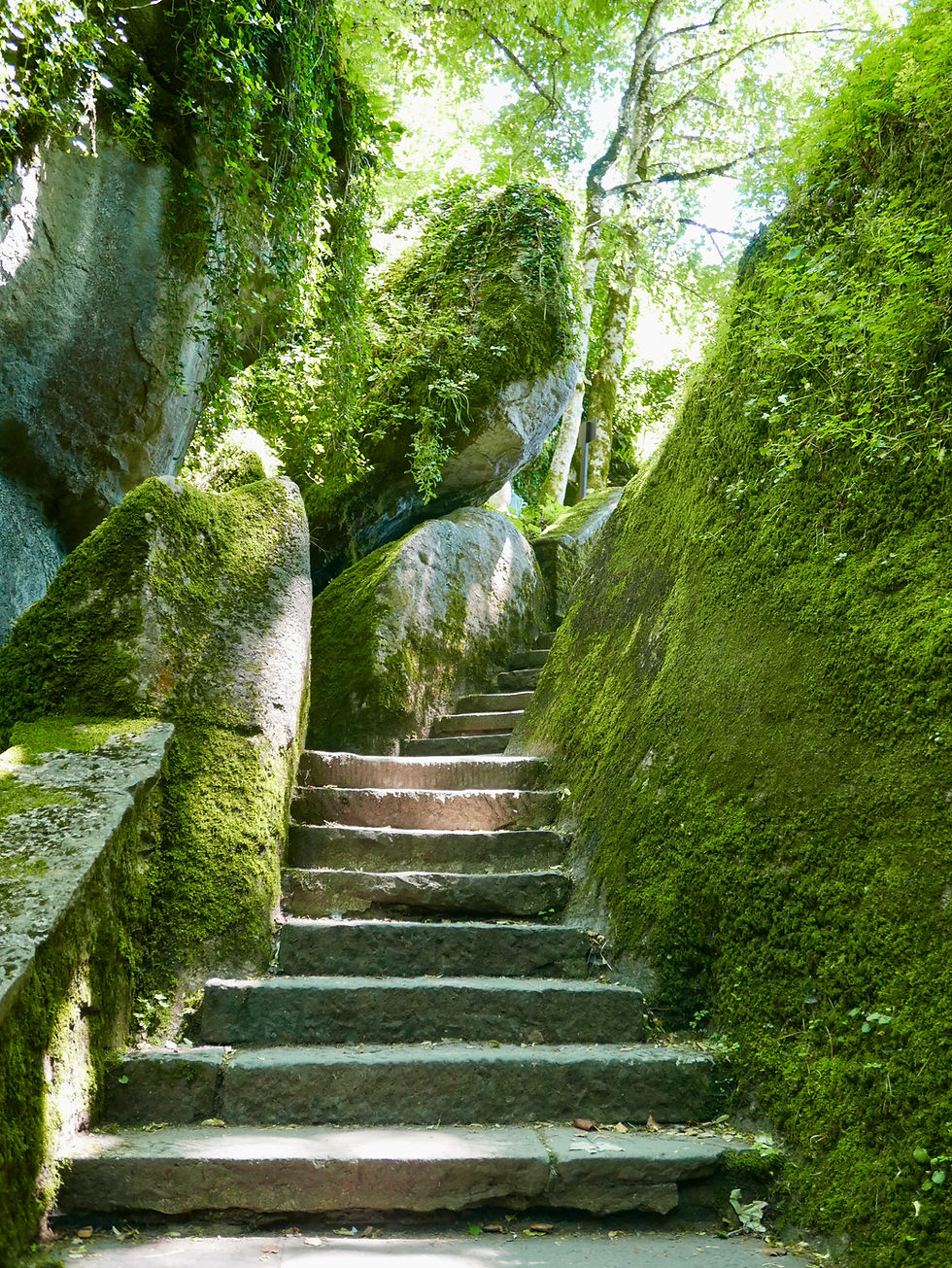
The same fragrance of peace lingers in the Hermitage of Carceri, hidden among ancient oak forests overlooking Assisi. Here, Francis and his brothers withdrew into prayer. We entered the tiny stone cell where Francis slept. Calling it a room almost feels misleading. It is scarcely larger than the human body itself. To enter, every pilgrim must assume a certain posture. They must bow. It also helps to have a slender frame, a reminder of the radical poverty embraced by the saint who called Lady Poverty his bride. Before your mind can reflect on humility, your body has already begun to practise it. It is impossible to enter standing proudly.
St Carlo and St Francis
One of the most moving moments of our time in Assisi came in Santa Maria Maggiore, where thousands now come to pray before the tomb of St Carlo Acutis. As you enter the church, two signs greet every visitor. One points towards Eucharistic Adoration. The other points towards Carlo. It feels as though Carlo himself is saying:
"Before you come to see me... go and spend time with Him."
It is exactly what his life proclaimed. Carlo never sought attention for himself, something easily forgotten amid the extraordinary interest that now surrounds him. His deepest desire was always to lead people to Jesus in the Eucharist.
Perhaps, in God's providence, the young millennial saint has begun a new pilgrimage within this time old one. Pilgrims from all over the world now come to Assisi because of Carlo. Carlo leads them to Francis. Francis leads them to Christ. Every authentic saint disappears into He who is infinitely greater.

Carlo's tomb lies in a narrow corner of the church, more hidden than the many photographs and videos had led me to believe. Yet there he was, resting in his familiar Nike trainers and blue tracksuit. His hair seemed thick and full of life. A rosary rested lightly in his hands, yet somehow they looked as though they still held it in prayer. If he had opened his eyes, I would not have been surprised. Nor would I have been afraid. He is alive. A modern saint sleeping in an ancient church, awaiting the resurrection of the dead, Nikes laced and ready. And then the contrast struck me.
I doubt Francis ever owned Nike trainers, because he owned almost nothing at all. Here, in the very church where Francis stripped himself of even his own clothes before the bishop and his earthly father, stood the tomb of a young man dressed much like any teenager of today. At first, the contrast almost seemed too great. Then I began to wonder whether that contrast is precisely the point.
Francis renounced everything because that was the road Christ laid before him. Carlo did not imitate Francis by dressing like a thirteenth-century friar; he imitated him by pointing, with the whole of his life, away from himself and towards Christ. The outward differences between them are plain to see, but the inward direction is exactly the same.
Then the thought gave way to another. What are possessions, really?

In my hand was a book that I owned. Its first owner, like Francis, had long since entered eternity. Its cover was tattered, its pages yellowed. Yet the truth it proclaims remains untouched. And so, perhaps the question is not what we own, but what owns us. St Francis and St Carlo allowed themselves to be owned by Christ.
To belong to Christ is not merely to admire Him or imitate Him from a distance. It is to let Him lay claim to every ambition, every attachment, every success and every failure, until nothing remains that we insist on calling our own. It is to discover that freedom is found not in possessing less or more, but in belonging entirely to Someone else.
Perhaps this is why the saints are so difficult to imitate. One wears a broken, brown habit; another wears Nike trainers. One sleeps in caves; the other writes computer code. Their lives could scarcely appear more different. Yet beneath these outward differences lies the same reality. They belong to Christ. And in His eternal glory, saints can never truly belong to history. As we profess in the Creed, they belong to the communion of saints: a family that stretches not only across continents, but across centuries, across time itself.

As I closed Chesterton's little book for the final time in Assisi, I realised that its first owner and St Francis now belong to that same communion of saints. The book had passed from one pilgrim to another, but the truth it proclaims has never changed.
We often hear that catholic means universal because it embraces every nation, language and culture. Assisi reminds us that it is universal in another way too. It binds together centuries. And that is the greatest gift of this Transitus year. Eight hundred years after the passage of St Francis into eternal life, the treasure he discovered is still waiting to be uncovered by every pilgrim willing to make the journey to Assisi.



Comments